Security Advisory
Phishing Is Canada's Most Reported Cyber Fraud. The Fix Starts With a Pause.
Think about the last email you opened before your first coffee. A shared file, a Microsoft sign-in prompt, a courier saying your package is on hold. You probably clicked without a second thought. Phishing counts on that. It does not need to beat your firewall. It only needs you to act a few seconds before you think.
Why it still works
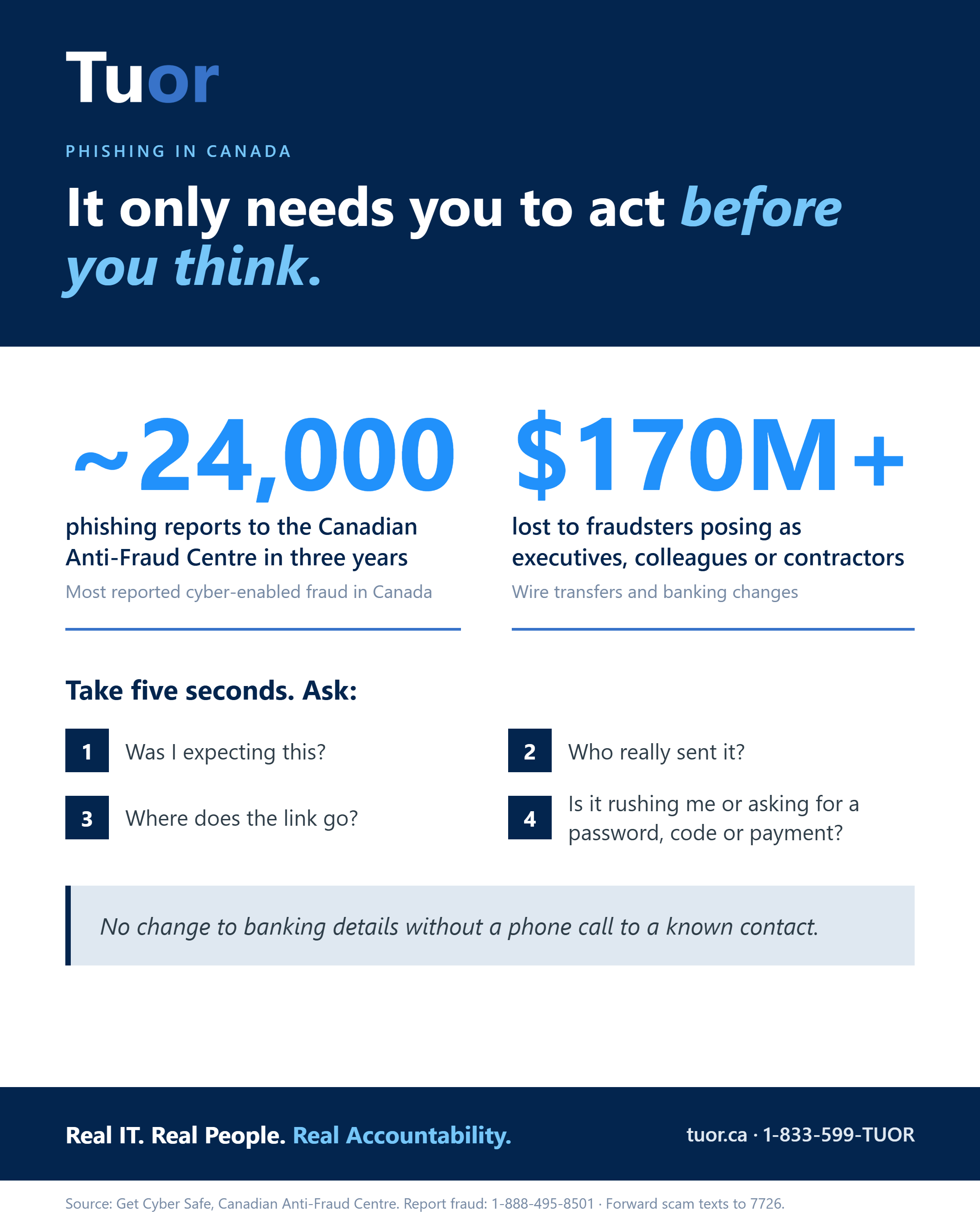
Over the past three years, the Canadian Anti-Fraud Centre received nearly 24,000 phishing reports, making phishing the most reported type of cyber-enabled fraud in Canada, according to Get Cyber Safe. That only counts the people who reported. Today's phishing looks like your bank, a vendor you pay every month or your own CEO, and it arrives by text and social media as often as email. It does not target careless people. It targets busy ones.
What a pause looks like
Five seconds and a few honest questions. Were you expecting this? Who actually sent it, past the display name? Where does the link really go when you hover over it? Is it rushing you? Is it asking for a password, an MFA code or a payment? If anything feels off, stop. You do not need to be sure it is a scam to treat it like one.
The part that matters for your business
The costliest phishing emails do not ask anyone to click. They ask someone to pay. Fraudsters posing as executives, colleagues or contractors have caused more than $170 million in losses in Canada over three years by requesting wire transfers and banking changes. Our rule for every client: no change to banking details without a phone call to a known contact. And when someone does click, thank them for speaking up rather than lecturing them. The first hour matters.
What to do this month
Turn on multi-factor authentication everywhere you can. Forward scam texts to 7726, which spells SPAM on most keypads. Report fraud to the Canadian Anti-Fraud Centre through its online reporting system or at 1-888-495-8501.
Where Tuor stands
No filter catches every phishing email, and we will not pretend ours does. Email security and staff phishing training are built into every Tuor engagement, because the last line of defence is a person taking five seconds to ask whether something makes sense. Start with our free cybersecurity assessment, or call 1-833-599-TUOR. We will give you the real answer.